

When I consult on Ultherapy in the clinic, I'm often asked, "Is it better to work quickly with both hands, or slowly with one hand?" To put my conclusion first, I look at depth before speed. Ultherapy is a treatment that delivers energy one shot at a time while checking the ultrasound screen, so rather than "how fast," it is "at how precise a layer" the energy reaches that can influence the result.
Where two-handed and one-handed treatment diverge
Ultherapy is divided into a method performed with both hands (commonly called "double Ultherapy") and a method performed with one hand. The two methods are less a matter of superiority than a matter of what you place first.
| Category | Two-handed treatment (double Ultherapy) | One-handed treatment |
|---|---|---|
| Strength | Favorable for shortening treatment time | Checks depth one shot at a time while watching the screen |
| Approach | Works both sides simultaneously | Adjusts energy by area |
| Suited situation | When you want to reduce time | When delicate design is needed |
When you look into Ultherapy on online communities, opinions are divided over "which method is more effective." However, it is hard to declare that any one method is absolutely superior. It is better to use as your standard which method better fits your current skin condition and goal.
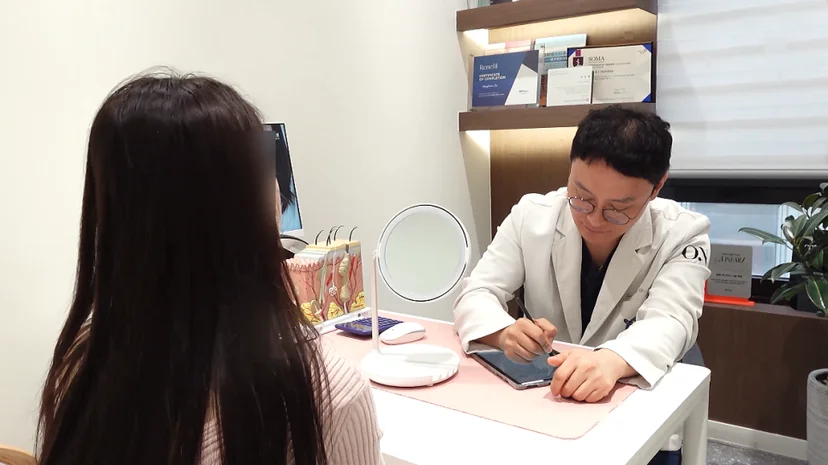
When you wonder why we treat while watching the ultrasound screen
One of Ultherapy's strengths is that the treatment can be performed while checking the ultrasound imaging (screen) in real time. It is a method of delivering energy one shot at a time to the desired depth, while seeing with your own eyes which layer beneath the skin the energy reaches.
When performed with one hand, the practitioner watches the screen and the treatment area at the same time. So it is possible to check with every shot whether the energy being delivered is going to the intended depth. I see it as an approach that makes the most of Ultherapy's principle of proceeding while checking the layered structure beneath the skin.
Ultherapy is not "a treatment you finish quickly," but "a treatment that reaches a precise depth." I explain this point first in the consultation.
It is true that two-handed treatment can have an advantage in speed. However, if you consider it important to proceed carefully one shot at a time while watching the screen, I recommend asking directly during the consultation, "Do you perform the treatment while watching the ultrasound screen?"
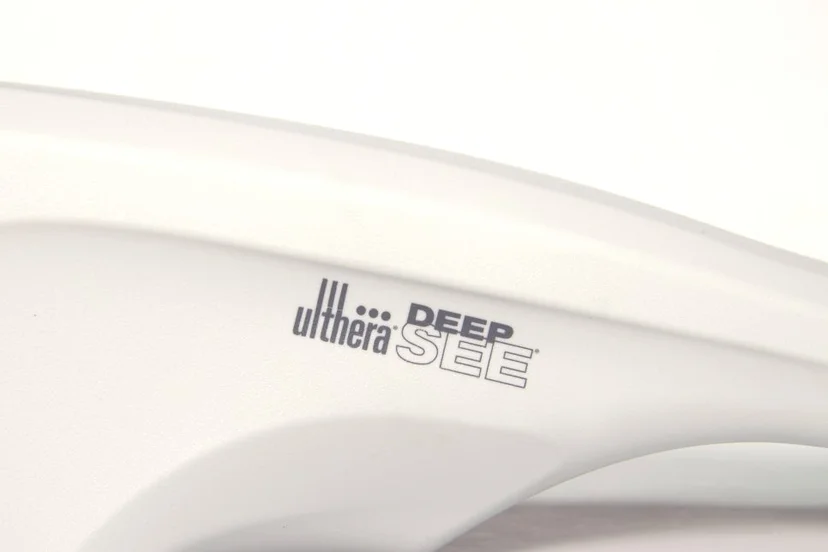
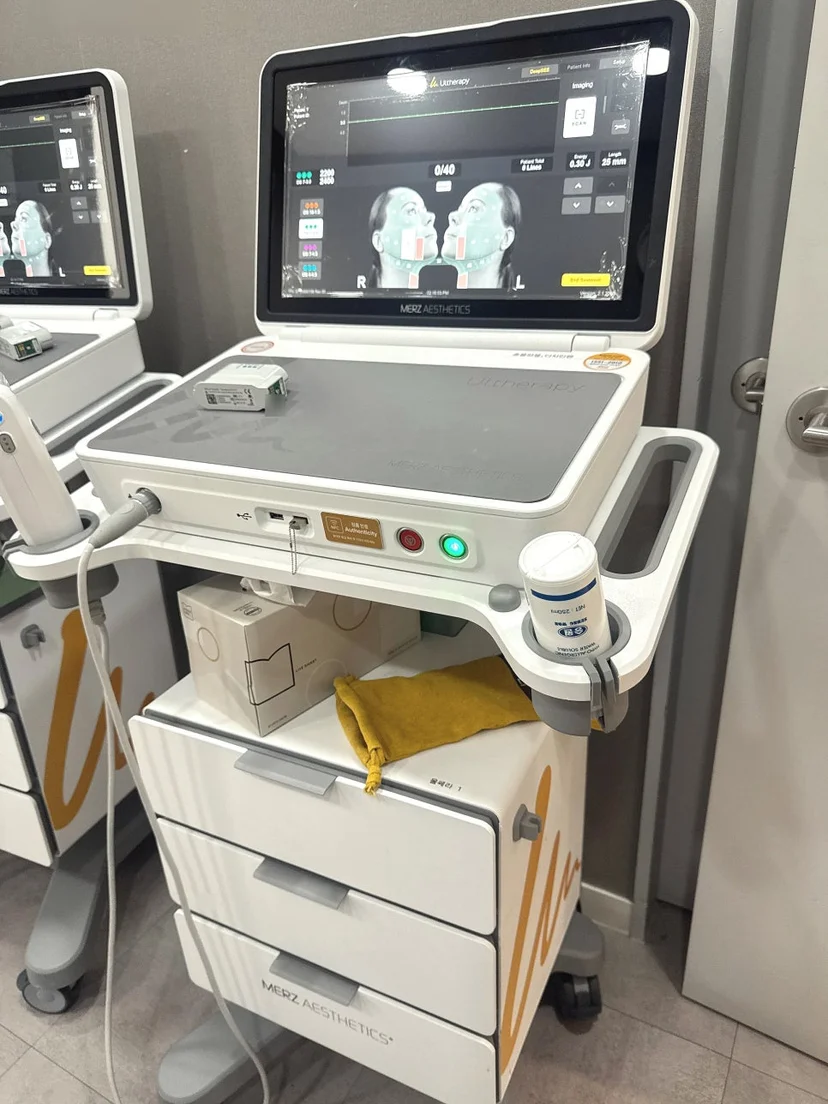
Ultherapy is often not a treatment finished in a single session, but one managed by dividing it into cycles depending on your condition. If you are curious about this, you may also want to refer to the criteria for dividing the Ultherapy cycle into six months and one year and why we don't finish Ultherapy in a single session together.
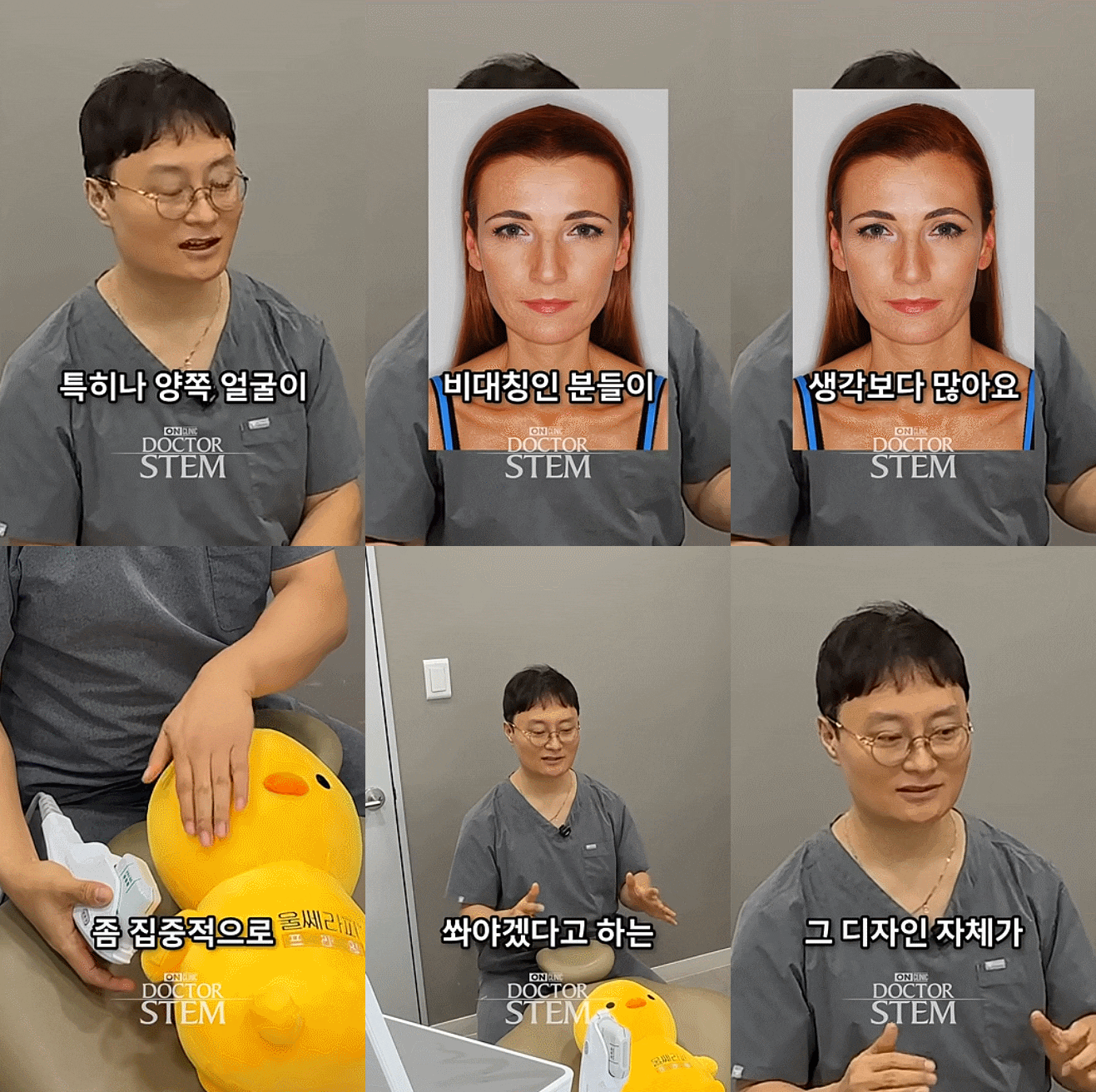
When the left and right of the face differ, how does the treatment design change?
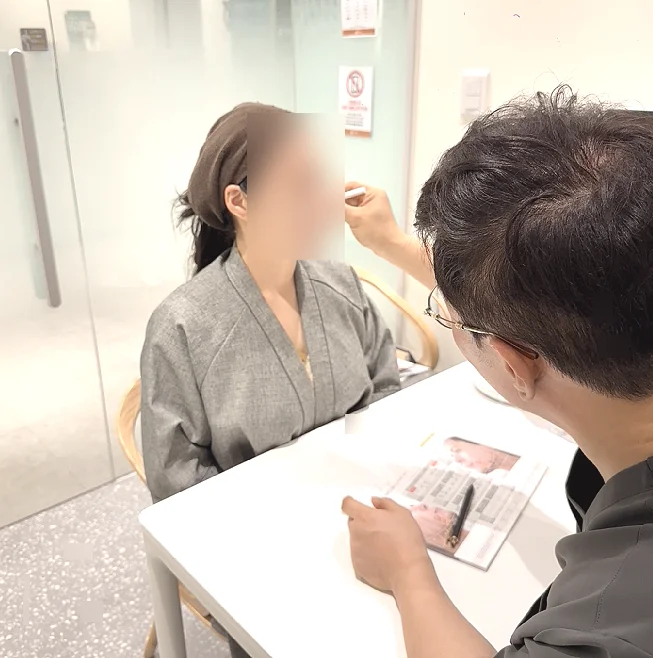
More people than you might expect have subtle asymmetry between the left and right of their face. Before an Ultherapy treatment, examining the left and right individually and designing where to concentrate more energy can influence how natural the result looks.
When there is asymmetry, rather than quickly proceeding on both sides with the same pattern, an approach that adjusts the amount and direction of energy differently to match each area's condition and degree of sagging is needed. One-handed treatment tends to be favorable for applying different strategies by area in this way. This also connects with the perspective of looking at depth and design before the number of shots, a point I covered in more detail in what we look at before the shot count when you ask about 300 shots in the clinic.
Here is a summary of what is good to check during the consultation.
- Whether the treatment is performed while watching the ultrasound screen
- Whether left-right facial asymmetry is checked and the design set separately
- Which method is used, and whether the reason is explained as well
The more thorough the customized design process, the more likely it may work positively on post-treatment satisfaction. If you have any questions, please feel free to inquire through getting a consultation by chat now.
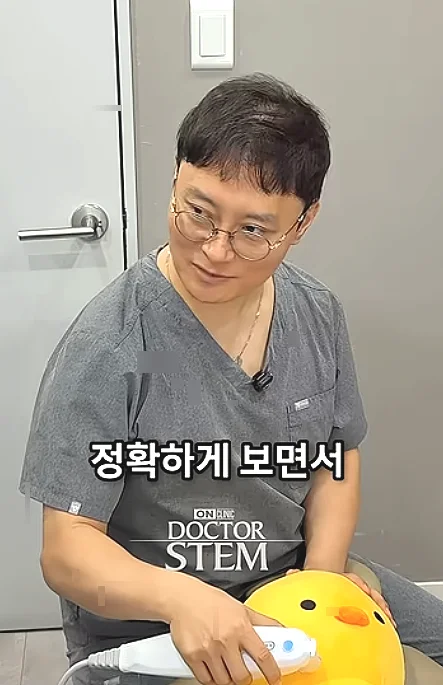
Precautions worth knowing before treatment
The effects and responses of Ultherapy may differ depending on an individual's skin condition, skin thickness, degree of sagging, and so on. Even when performed with the same method, individual differences exist in the results, so a process of discussing an approach suited to your own condition through sufficient consultation before treatment is important.
After treatment, temporary redness, swelling, pain, and sensory changes may appear at the treatment area. Most are temporary, but if symptoms persist or a response different from what was expected appears, I recommend consulting with the medical staff right away.
Whether the treatment is applicable and how it proceeds must be decided through direct examination and consultation by medical staff. If you are considering Ultherapy for the first time, I recommend being consulted at a place that explains which method is used and the reason as well. If you would like to look at Ultherapy from the perspective of improving a double chin, the two points where Ultherapy approaches a double chin may also be helpful.

Frequently asked questions
Between two-handed treatment (double Ultherapy) and one-handed treatment, which is more effective?
It is hard to declare that any one method is absolutely superior. Two-handed treatment can be favorable for reducing treatment time, and one-handed treatment allows a delicate approach that checks depth one shot at a time while watching the ultrasound screen. The key is to confirm through consultation which method fits your skin condition and goal.
During Ultherapy, must the treatment be performed while watching the ultrasound screen?
One of Ultherapy's core principles is delivering energy while checking the layers beneath the skin in real time. Proceeding while watching the screen makes it possible to check with every shot whether the energy is going precisely to the desired depth. I recommend confirming this point directly during the consultation.
Can I receive Ultherapy even if I have facial asymmetry?
Yes. However, if there is asymmetry, rather than proceeding on both sides with the same pattern, sufficiently grasping the left-right difference before treatment and designing the energy-delivery method differently by area can help toward a natural result. During the consultation, check whether the design process is carried out thoroughly.
What responses can appear after Ultherapy?
After treatment, temporary redness, swelling, pain, and sensory changes may appear. Most are temporary, but because responses can differ depending on an individual's skin condition, it is necessary to consult with the medical staff if symptoms persist.
What questions are good to ask during an Ultherapy consultation?
I recommend two: "Do you perform the treatment while watching the ultrasound screen?" and "Do you check left-right facial asymmetry and set the design separately?" A place that answers these questions specifically helps you judge the reliability of the treatment approach. If you are still unsure about the method, you may also inquire through getting a consultation by chat.
Recovery and downtime: what to expect after Ultherapy
Ultherapy is a lifting treatment that delivers ultrasound energy to the layers beneath the skin. Because it involves no incision, a return to daily life tends to be relatively quick. Right after the treatment, redness, mild swelling, and a tingling or prickling sensation may appear at the treatment area, but these generally tend to settle within a few hours to a few days. Some tenderness when pressed or slight discomfort may also linger for a few days. However, the pattern of recovery differs with skin thickness, the layer the energy is delivered to, and individual response, so if swelling or pain persists for a long time or an unexpected response appears, I recommend consulting the medical staff. Washing the face and basic daily activities are usually possible even on the day of treatment, but because specific aftercare can vary by method, it is best to be guided during your visit.
How the cost is made up: what sets the amount
The cost of Ultherapy is less a single fixed figure than something decided by several factors coming together. Representative factors that set the amount include the treatment range (whether the whole face, or a partial area such as the double chin or neck), the number of shots delivered, whether the treatment proceeds with two hands (double Ultherapy) or one hand, the pre-treatment measurement of left-right asymmetry and the design process, and whether aftercare is included. Even for the same "Ultherapy," the makeup can differ by area, shot count, and method, so rather than simply comparing price alone, it is better to check what the cost includes. The exact cost is guided through consultation after your skin condition and goal are confirmed.
Guidance for a beauty visit to Korea: Sinnonhyeon, easy to reach
ON Clinic is located in Sinnonhyeon, close to Gangnam Station, so it is convenient to reach on foot from the subway. Because Ultherapy is a treatment best decided after hearing which method is used and why, we offer consultation so you can organize your questions in advance. For visitors from overseas, please feel free to ask about consultation and reservation, including language support, through getting a consultation by chat.
Written by: Dr. Oh Seung-min (Representative Director of ON Clinic, graduate of Seoul National University College of Medicine, Chair of the Academic Committee of the Korean Society for Laser Dermatology and Trichology). You can find a detailed background at Meet the medical team. First published 2026-06-22 / Last reviewed 2026-07-09
This article is intended to provide general information, and the appropriate treatment and results may vary depending on individual conditions.


