

When I consult on Ultherapy Prime in the exam room, the first question is often "Please give me a certain number of shots." But before counting shots, I turn on the ultrasound screen first. That is because the depth at which the energy lands is what determines the result. In this article, I have laid out how Ultherapy Prime works, how it differs from conventional Ultherapy, and why the same treatment produces different effects from person to person, exactly the way I explain it in the exam room.
Why I turn on the ultrasound screen first
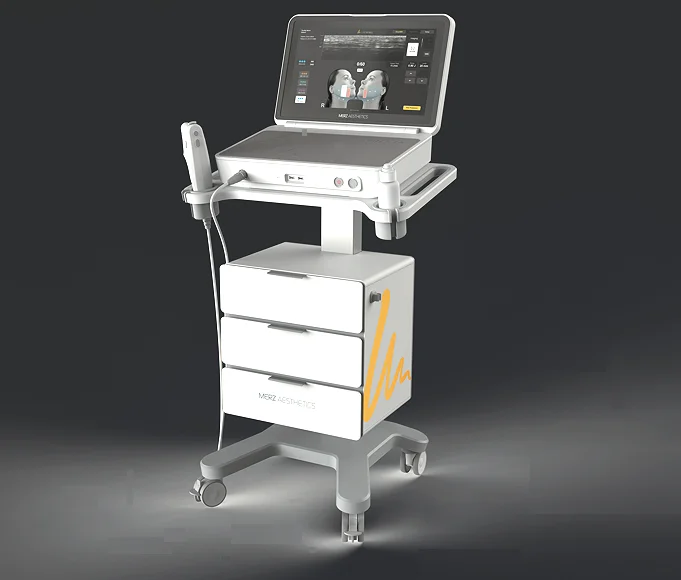
Ultherapy Prime uses high-intensity focused ultrasound, that is, MFU-V (Micro-Focused Ultrasound with Visualization). Unlike some laser treatments that act mainly on the skin surface, the principle is that ultrasound energy is concentrated at a target depth, forming a thermal coagulation point at that spot, which in turn induces a collagen regeneration response.
The key point is that the structures beneath the skin can be checked in real-time imaging during the treatment. Because the medical staff determine where to deliver the energy while looking at the state of the skin layers with their own eyes, it helps deliver energy accurately to the desired depth. That is why I turn on the screen first.
The cartridges are mainly divided into three depths, and each depth targets a different layer with a different expected change.
| Depth | Layer acted upon | Change you can expect |
|---|---|---|
| 1.5mm | Shallow dermis | Improvement of fine lines and skin texture |
| 3.0mm | Deep dermis and subcutaneous fat boundary | Elasticity and tightening |
| 4.5mm | SMAS fascial layer | Lifting of the jawline, cheek sagging, and neck line |
The SMAS fascial layer targeted at 4.5mm is also the layer mainly addressed in facelift surgery. Ultherapy Prime delivers thermal energy to tissue at this depth without incision, inducing a contraction and regeneration response, so improvements in elasticity and a lifting effect can be expected over time. However, results may vary depending on individual skin condition.

How is it different from conventional Ultherapy?
Ultherapy Prime inherits the same MFU-V principle of conventional Ultherapy while being known as a device with an improved real-time imaging environment and greater convenience during the treatment process. Conventional Ultherapy also allows treatment while viewing ultrasound images, but Prime is introduced as a version in which this aspect has been refined more precisely.
Among those in Gangnam looking into Ultherapy-family treatments, many focus on the "number of shots." But from an exam-room perspective, far more important than the number of shots is whether the energy is delivered to the correct depth.
If energy is delivered too shallowly or applied to an inappropriate layer, it is hard to feel the desired change, and unnecessary pain or discomfort may appear. Conversely, if energy is delivered excessively toward the fat layer, changes such as cheek hollowing may appear.
That is why it is important for the medical staff to check the skin layers in real time with ultrasound imaging and adjust the energy delivery location to match the individual's skin thickness and structure. Simply having many shots does not mean the effect is proportionally greater. An article that examines this point in a bit more detail is Why we look at the plan and consultation before the device in Ultherapy Prime, and what I look at first when you ask about a number like 300 shots continues in The things I check before the number of shots.
If you are torn over depth and intensity, you may also ask your questions first through Get a consultation by chat now.
Why do the effects differ for the same treatment?
Ultherapy Prime is not a treatment that produces identical results for everyone. Depending on many factors such as skin thickness, amount of fat, degree of sagging, and prior treatment history, there can be individual differences in effect and satisfaction.
In the exam room, the cases where Prime may be worth considering as one of the options for lifting and improving elasticity are generally as follows.
- Those with thin or medium-thickness skin
- Those whose skin sagging is not severe
- Those in the early aging stage, where the jawline is breaking down and the cheeks are descending
- Those whose skin elasticity has declined but who have sufficient facial fat
Conversely, when there is a lot of facial fat, or on the contrary very little, it can be hard to achieve sufficient satisfaction with the treatment alone. In such cases, it is better to determine after examination, according to individual condition, whether to combine it with other lifting, volume, or elasticity treatments. The criteria for dividing whether to address sagging or elasticity first are covered in detail in The exam-room criteria for deciding whether to recommend AllTight or Ultherapy.
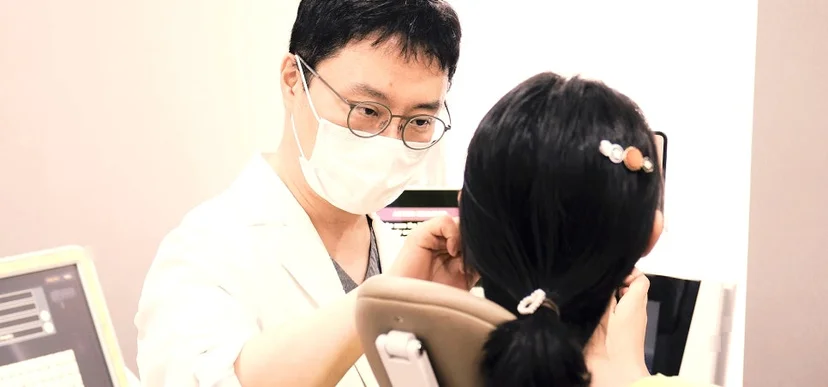
After the treatment, temporary redness, swelling, tenderness, bruising, numbness, and a stiff feeling may appear. Depending on individual skin thickness, fat layer, treatment area, and energy settings, cheek hollowing, asymmetry, or pain may rarely occur, so sufficient consultation before the treatment is necessary.

After the treatment, is it okay to just watch these reactions?
Temporary swelling, redness, and stiffness that appear during recovery may be natural reactions. However, if the symptoms persist or worsen, it is best to promptly contact the medical institution that performed the treatment.
The lifting effect often appears over time as collagen regeneration progresses, rather than immediately after the treatment. The duration of the effect and the level of satisfaction also vary depending on individual condition. So before deciding on your first treatment, I recommend organizing your condition together in the following order.
- Check your own skin thickness and degree of sagging
- Organize your history of previous treatments and their results
- Check the skin layers and facial structure with ultrasound imaging, then plan the appropriate depth and intensity
- Determine after examination whether a standalone treatment is suitable or whether a combination is needed
The reason why, even with the same Ultherapy, the interval divides into six months for some and a year for others is explained further in The exam-room criteria for dividing the Ultherapy treatment interval.

Things worth checking together before your consultation
If you are considering Ultherapy Prime, rather than comparing only the number of shots or the price, it is important to look at whether the medical staff actually check the skin layers and facial structure with ultrasound imaging and then plan the depth and energy intensity. A one-size-fits-all treatment that does not consider the individual's skin structure can make it hard to achieve the desired result.
If your concern does not end with lifting alone and you are also worried about pores or skin texture, you can refer to how a combination is designed in The criteria for dividing the Retigen and Oligio X combination in pore treatment. If you are curious about which direction suits your skin condition, please feel free to inquire by clicking Get a consultation by chat.
Frequently asked questions
What actually differs between Prime and conventional Ultherapy?
Both devices are based on the MFU-V (high-intensity focused ultrasound) principle. The basic operating principle is the same, but Ultherapy Prime is introduced as having an improved real-time imaging environment and greater convenience during the treatment process, which is characterized by allowing the treatment to be performed while checking the skin layers more precisely.
What reactions can appear after the treatment?
Temporary redness, swelling, tenderness, bruising, numbness, and a stiff feeling may appear. Depending on individual skin thickness, fat layer, treatment area, and energy settings, cheek hollowing, asymmetry, or pain may rarely occur, so it is important to consult sufficiently with the medical staff before the treatment.
Does a larger number of shots mean a better effect?
The effect is not determined by the number of shots alone. What matters more is whether the energy is delivered to the correct depth that matches the individual's skin thickness and structure. If energy is applied to an inappropriate layer, it can be hard to achieve the desired change, or it may instead cause unnecessary discomfort.
What skin condition does it tend to suit well?
It can be one of the options for those whose skin thickness is thin or medium, whose sagging is not severe, and whose jawline breakdown or cheek sagging is at an early stage, or for those whose skin elasticity has declined but who have sufficient facial fat. However, depending on individual condition, a combination may be more suitable than a standalone treatment, so a decision after examination is recommended.
When does the effect start to appear?
The lifting effect often appears over time as collagen regeneration progresses, rather than immediately after the treatment. The timing at which the effect appears and its duration may vary depending on individual skin condition.
Recovery and downtime: how the first few days go
Because Ultherapy Prime delivers ultrasound energy into the skin without any incision, return to daily life is generally known to be relatively quick right after the treatment. That said, on the day of the treatment and for a few days afterward, reactions such as redness, mild swelling, a tingling sensation, tenderness when pressed, and stiffness may appear, and these tend to subside within a few days in most cases. The recovery pattern and its duration vary from person to person, and can feel different depending on skin thickness, energy settings, and treatment area. For a short while after the treatment, it is best to avoid activities with prolonged heat such as sauna or hot compresses, and to hold off on irritating skincare while swelling or sensitivity remains. If the symptoms do not settle after several days or instead worsen, please contact the medical institution that performed the treatment.
How the cost is structured: what we look at before the number of shots
Many people are curious about the cost of Ultherapy Prime, but the exact amount is provided through consultation after checking the skin condition. The factors that shape the cost are generally the treatment area (whether the whole face, or a specific area such as the jawline or neck), the combination of cartridge depths used, and the energy plan designed to match the skin structure confirmed by ultrasound. It also varies depending on whether post-treatment care or a follow-up consultation is included. As explained earlier, since the same number of shots produces different results depending on which depth the energy reaches and how it is delivered, it is better to look together at what is included in the plan rather than comparing only the unit price per shot.
For visitors traveling to Korea
ON Clinic is located near Gangnam Station and is within convenient walking distance from the subway. If you would like to organize in advance whether Ultherapy Prime is a suitable choice for your skin and which depth and intensity would be appropriate, you can ask your questions first through Get a consultation by chat now before your visit. Consultation is available in multiple languages, and appointment scheduling and interpretation support can be arranged comfortably through chat.
Written by Dr. Oh Seung-min (Representative Director of ON Clinic, graduate of Seoul National University College of Medicine, Chair of the Academic Committee of the Korean Society for Laser Dermatology and Trichology). His detailed background can be found at Meet the medical team. First published 2026-06-06 / Last reviewed 2026-07-09
This article is intended to provide general information; the treatment and results appropriate for you may vary depending on your individual condition.


