


When counseling patients about AllTight lifting in the consultation room, there is a concern that comes up almost as often as sagging or the jawline. It is the question, "Won't lifting make my cheeks look even more hollow?" This is not just an idle worry; because how it actually feels can differ depending on facial structure, it is worth addressing.

AllTight lifting is one of the non-incisional lifting methods performed without any incision, and it can be considered as an option by those who feel uneasy about surgical approaches. That said, even with the same procedure the results can appear differently from person to person, and this is influenced together by skin thickness, the amount of fat, the degree of sagging, and the history of procedures received so far. In this article, keeping the concern about cheek hollowing at the center, I would like to lay out the perspective from which we examine the face in the consultation room before the procedure.
What those considering non-incisional lifting first check in the consultation room
For those whose jawline looks blurred, whose cheeks have begun to sag, or whose facial line looks dull because of a double chin, AllTight lifting becomes one management option. But at the very start of the consultation, rather than deciding on intensity or the number of shots, what we look at first is the shape of that person's face itself.
This is because the approach can differ for someone with a lot of facial fat, someone with excessively little fat, and someone with thin skin. Rather than delivering equally strong energy across the entire face, a process must follow that designs the treatment by distinguishing between the areas where sagging stands out and the areas where volume needs to be preserved. The reasoning for judging whether to address sagging or elasticity first is something I have discussed in a similar way in the consultation-room criteria for distinguishing whether sagging or elasticity comes first.


Why does the change of cheeks looking hollow appear after the procedure?
When someone feels that their cheeks look hollow after AllTight lifting, this is related less to tissue largely disappearing and more to the way the original facial structure becomes revealed. Those who originally lacked volume in the front cheek or side cheek have the possibility that the existing hollowing stands out more as the facial line becomes tidied up.
When the shadows below the cheekbone or around the nasolabial folds are emphasized, even if the actual change is not large, people may perceive it as their cheeks having become hollow. Those with little facial fat, prominent cheekbones, or thin skin can feel this change more strongly, so this is a point that must be checked during the pre-procedure consultation.
If lifting is planned by energy intensity alone, cases can arise where sagging is addressed but the volume ends up feeling lacking. The judgment of which areas to deliver energy to and which areas to leave volume in becomes the starting point for handling the concern about cheek hollowing.
If cheek hollowing is on your mind, I recommend confirming this distinction sufficiently at the consultation stage. If you have any questions, you may also feel free to ask through getting a consultation by chat now.
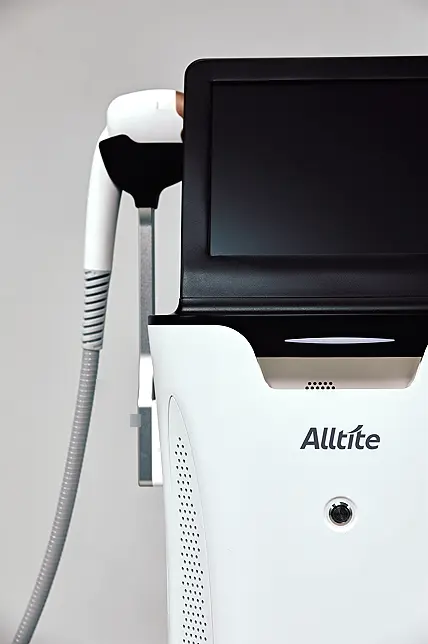
What does it mean to divide the approach by area?
Even in the same face, what each area needs is different. The way we look at the face by dividing it in the consultation room can be summarized roughly like this.
- Areas where sagging stands out, such as the jawline and the side cheek, are approached in the direction of pulling up elasticity
- Areas where volume is lacking, such as the front cheek or below the cheekbone, are left with energy adjusted so that hollowing is not emphasized
- Areas with thin skin can be sensitive in their response, so the intensity is finely adjusted
Designing the treatment by dividing areas this way lets us strike a balance that tidies up sagging while preserving volume. The point that how you divide and approach affects the result as much as which device you use is also connected to the perspective for checking AllTight, Titanium Lift, and ONDA lifting before the procedure.

Three things checked in the consultation room before the procedure
If you are considering AllTight lifting, it helps to look over the following three things in advance before the consultation.
| Item to check | Why we look at it |
|---|---|
| Skin thickness, fat amount, degree of sagging, face shape | The basic conditions that govern the treatment direction and intensity design |
| History of past procedures | The effects of previous procedures such as fillers or thread lifts may remain |
| Understanding of the post-procedure response | Redness, swelling, warmth, bruising, numbness, and so on can appear with individual variation |
First, skin thickness, fat amount, degree of sagging, and face shape directly affect the treatment direction and result. Second, if you have previously experienced cheek denting after lifting, or have a history of fillers or thread lifts, these must be examined together with your current condition. Third is understanding the post-procedure response. After the procedure, temporary redness, swelling, warmth, bruising, numbness, stiffness, and the like can appear, and in most cases they tend to ease as time passes, but the degree of discomfort can differ depending on individual condition, so prior guidance is important.

What changes if you have previously received filler or a thread lift?
The traces of a previous procedure can leave an influence beneath the skin even when they do not show clearly on the surface. That is why those with a history go through a process of checking their current skin condition together with their procedure records. Behind the fact that even the same AllTight shows a different lasting feeling or result from person to person lies this kind of individual variation, and I have unpacked this part in more detail in the things we check first in the consultation room about why the duration differs even with the same AllTight.
Why design, more than the device, determines the result
AllTight lifting becomes one option for those whose concern is facial line and declining elasticity, but the direction changes depending on face shape and skin condition. Especially if cheek hollowing worries you, rather than comparing only intensity or the number of shots, it is better to first grasp where on your face an approach is needed and where you should be careful.
At On Clinic, we use an AI skin measuring device to check the individual's skin condition and facial structure, and then conduct the consultation in a way that distinguishes the areas that need treatment from the areas requiring caution. Building a plan based on objective data can help reduce concerns such as cheek hollowing. The way we organize the approach in the consultation room when overall facial elasticity is a concern can also be followed further in the reasons we recommend AllTight first.
In the end, lifting is determined by how you approach as much as by which device you use. If the direction feels ambiguous, I recommend asking comfortably below.
Get a consultation by chat
Frequently asked questions
Can cheek hollowing occur after AllTight lifting?
Those who originally lack volume in the front cheek or side cheek, those with thin skin, and those with little facial fat may find the existing hollowing standing out more after the procedure. Even if the actual tissue change is not large, when shadows are emphasized during the process of tidying up the facial line one may feel that the cheeks look hollow, so it is important to carefully check one's own facial structure at the pre-procedure consultation stage.
Can anyone receive AllTight lifting?
Because it is a non-incisional method, it can be considered by those for whom surgery feels burdensome, but it is not a procedure equally suitable for everyone. Suitability and direction can differ depending on skin thickness, fat amount, face shape, and history of past procedures, and for those with very little facial fat or thin skin the treatment method may differ.
How long does swelling or redness last after the procedure?
After the procedure, temporary redness, swelling, warmth, bruising, numbness, stiffness, and the like can appear depending on the individual. In most cases they tend to ease as time passes, but the degree and duration of discomfort can differ depending on one's skin condition, so it is good to receive sufficient guidance before the procedure.
Is AllTight lifting possible even if I have previously received filler or a thread lift?
If you have a history of past procedures such as fillers or thread lifts, a process of checking your current skin condition together with your procedure history is needed. Since the effects of previous procedures may remain, we recommend sharing your history accurately during consultation and confirming a direction suited to your current condition.
What should I check during an AllTight lifting consultation?
Before the consultation, it is good to grasp your own skin thickness, fat amount, degree of sagging, face shape, and history of past procedures. Especially if you are worried about cheek hollowing, it is important to check specifically which areas energy should be delivered to and which areas volume should be preserved in, that is, the area-by-area approach.
Recovery and downtime
Because AllTight lifting is a non-incisional method that delivers energy without any incision, the burden of returning to daily life tends to be relatively small. After the procedure, temporary redness, swelling, warmth, a tingling sensation, mild bruising, or stiffness can appear; these responses usually tend to settle within a few days, with individual variation. Those with thin skin or sensitivity to stimulation may feel that recovery takes a little longer, so it helps to be guided on the likely response pattern before the procedure.
How the cost is put together
The cost of AllTight lifting is made up of several factors rather than being set as a single fixed price. It can differ depending on the skin condition and facial structure confirmed through AI skin measurement, how the areas where sagging stands out and the areas where volume should be preserved are divided, the treatment range and the amount of energy delivered, and whether aftercare is included. This is why the figure quoted can vary with the design even for the same procedure name, and the exact cost is given after a consultation that checks the condition of your face. If you would like a rough sense of how it is composed, you may use asking by chat now.
Visiting Korea for a treatment
On Clinic is located near Sinnonhyeon and Gangnam Station, within walking distance of the subway and easy to reach by public transport during a trip to Korea. For visitors from abroad, consultation with language support is available, so you can confirm the area-by-area approach for cheek concerns and how the cost is put together before your visit. Reservations and questions can be handled conveniently in advance through chat consultation.
Written by Dr. Oh Seung-min (Representative Director of On Clinic, graduate of Seoul National University College of Medicine, Chair of the Academic Committee of the Korean Society for Laser Dermatology and Hair). Detailed credentials can be found at Meet Our Medical Team. First published 2026-06-09 / Last reviewed 2026-07-09
This article is intended to provide general information, and the appropriate treatment and results may differ depending on the individual's condition.


