

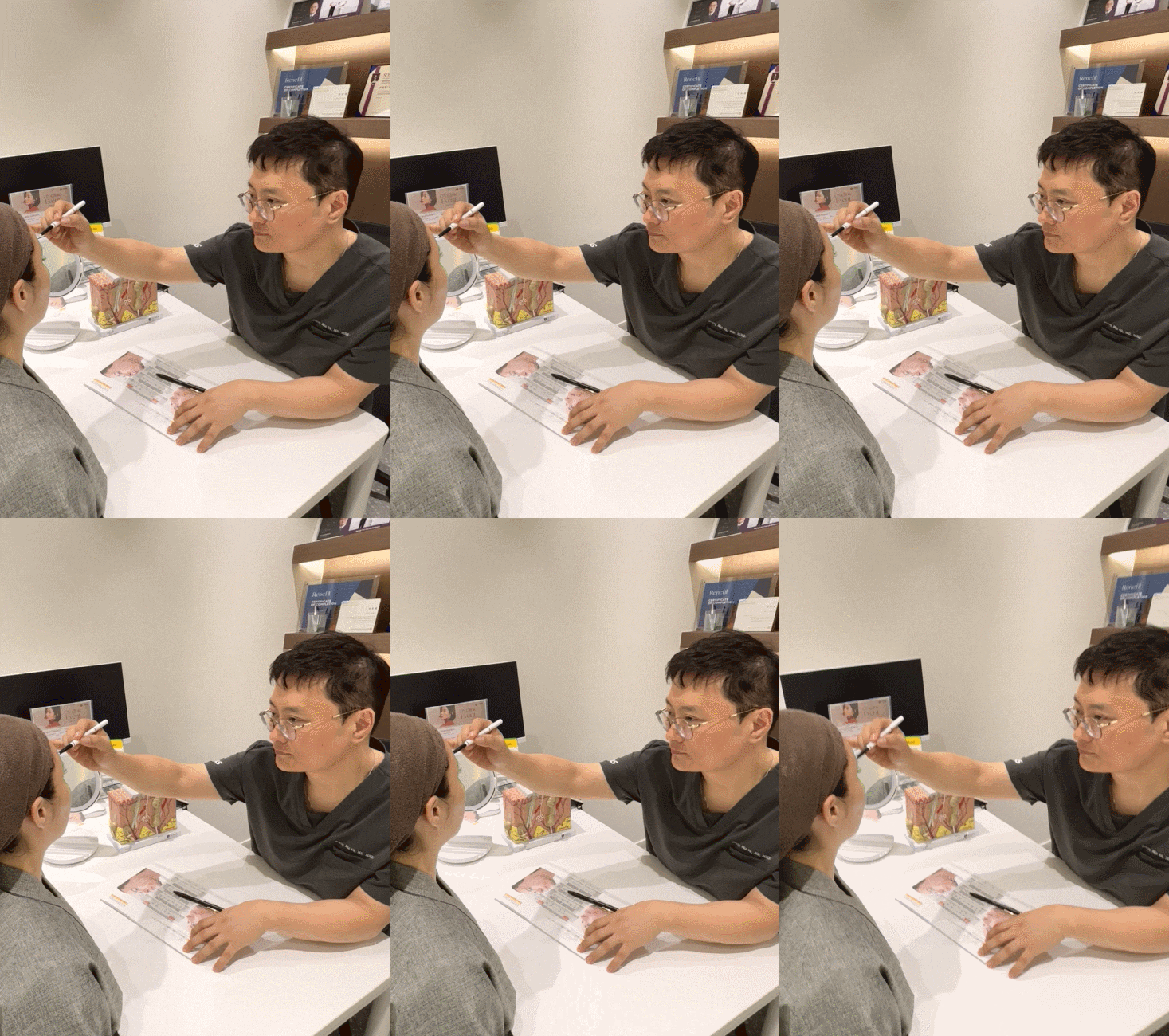
When I consult about the Titanium Lift in the exam room, I focus on three questions that come before the name of the procedure itself, rather than the name. Whether this procedure suits my skin right now, whether the pain is bearable, and how long the results last. The fact that it manages loss of elasticity and changes in the facial line without incisions, as a non-surgical lift, is a clear advantage, but even with the same procedure the results appear differently from person to person. I have organized the three questions we most often hear at OAN Clinic near Sinnonhyeon from the exam-room perspective.
Why I look at the skin's condition first, not the name of the procedure
The Titanium Lift is a non-surgical lift you can consider for concerns where skin elasticity has declined and the facial line has become blurred. Many people become interested when their jawline looks less defined than before, when cheek sagging has begun, or when they feel the overall contour has collapsed.
Its biggest feature is that it is performed without incisions. For those who find a surgical lift burdensome or office workers who cannot set aside a long recovery period, it is an option worth considering after a consultation. That said, what I always emphasize in the exam room is that we should not decide based on the name of the procedure alone.
Even with the same Titanium Lift, the design differs for a person with thin skin and a person with a large amount of fat. When sagging is severe or there is too little fat, it may be hard to expect the desired change from the procedure alone.
That is why, before deciding, the process of reviewing the factors below comprehensively comes first.
- Skin thickness and degree of elasticity loss
- Face shape and fat distribution
- History of lifting procedures received previously
- Usual sensitivity to heat or pain
At OAN Clinic, we use the measurement results of the AI skin analyzer Muse as reference material for the consultation, examining the skin condition and areas of concern in detail before guiding you toward a direction suited to your individual condition. If you are curious about the criteria for choosing a lifting device, we also recommend reading the article explaining why we look at depth before the number of shots.
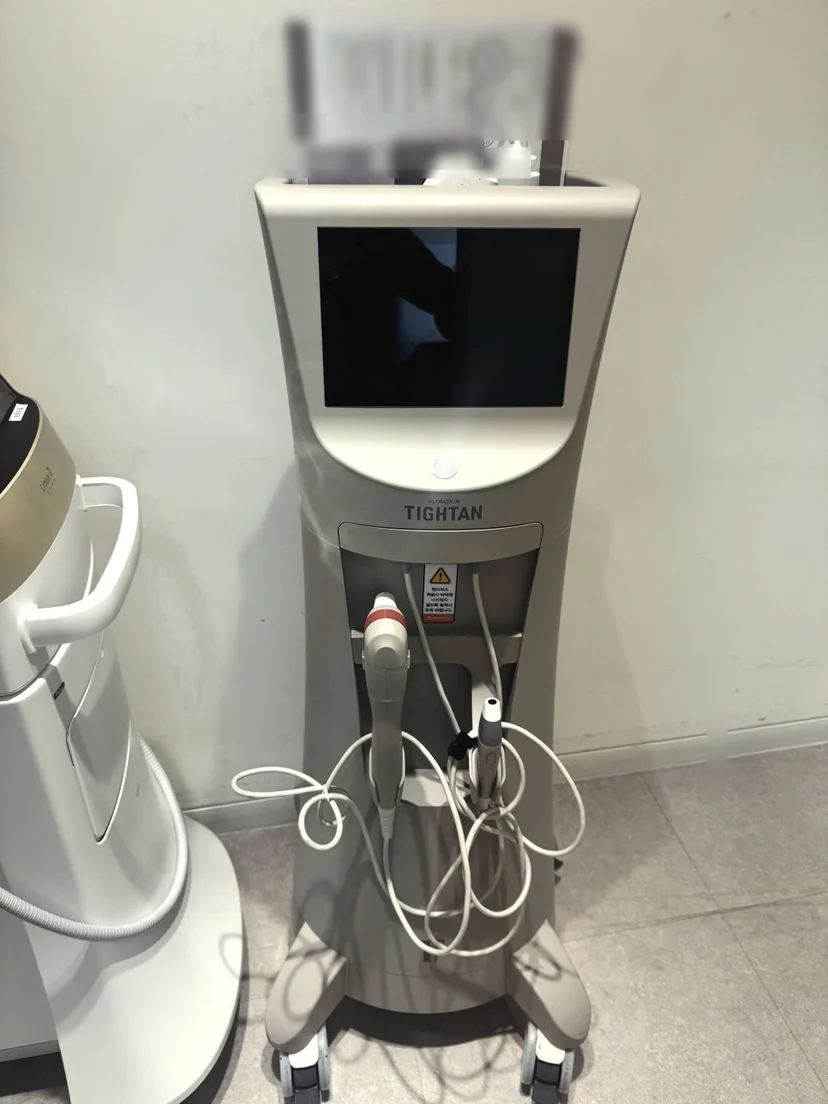
The cases where the Titanium Lift is a good fit and the cases that call for a cautious approach can be organized in a table as follows.
| Category | Condition |
|---|---|
| Cases worth considering | Blurred jawline, early cheek sagging, preference for a non-surgical method, wanting a short recovery |
| Cases calling for caution | Sagging has progressed considerably, large amount of fat, too little fat on the face |
How much does it hurt during the procedure
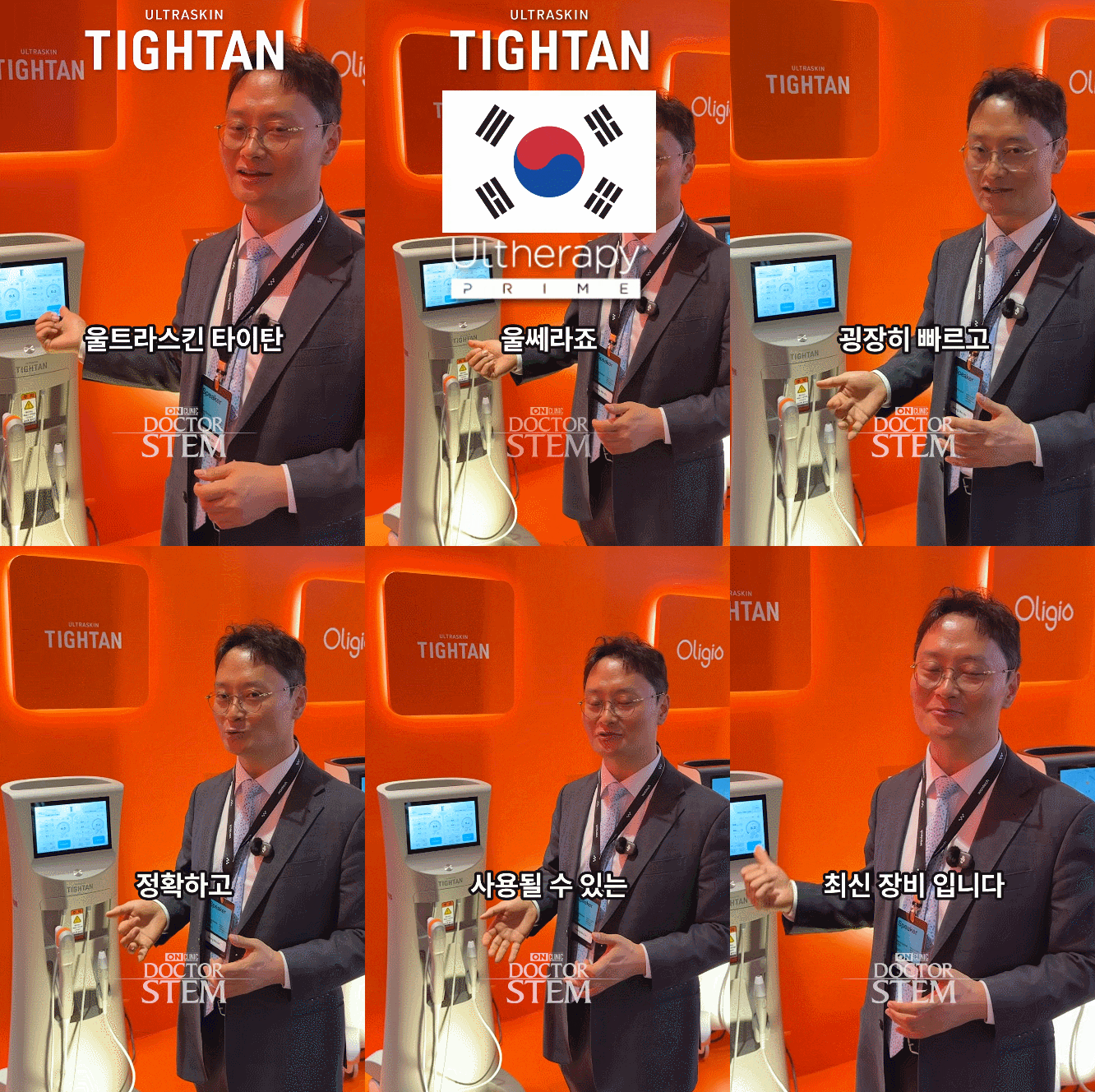
The first thing people worry about when considering the Titanium Lift is pain. During the procedure you may feel warm heat, a slight sting, and a pulling sensation, and its intensity is felt differently from person to person.
In the following cases in particular, the discomfort may feel relatively greater: those with thin skin, those sensitive to heat, those having areas close to bone such as the cheekbones or jawline treated, and those who felt significant pain during a previous lift. If you have such a history, it is better to talk about it fully during the consultation.
After the procedure, temporary redness, heat, tightness, and slight swelling may appear depending on the individual. In most cases these ease naturally over time, but there are differences depending on the skin condition and the intensity of the procedure.
To sum up, the key to reducing pain is prior communication. If you convey your usual skin sensitivity and past procedure experience in advance, the intensity or the area can be adjusted to match. If you are worried about pain, rather than enduring and letting it pass, please bring it up first during the consultation. Get a consultation by chat now
How long do the results last
There is individual variation in the duration. Even with the same procedure the results appear differently, and several factors act together here.
- The state of skin elasticity and degree of aging
- Lifestyle habits and the treated area
- The intensity and number of procedures
- Whether after-care is done
Generally, some people feel a change in elasticity for a certain period after a single procedure, but there may be differences in the post-procedure change or the duration between someone whose elasticity is usually good and someone whose sagging has progressed considerably. The same duration is not guaranteed for everyone.
Here I recommend shifting your perspective once. A lift is not a procedure that creates a permanent change in a single session; it is closer to the concept of periodic management tailored to the skin's condition. The procedure interval and management direction appropriate for you are best decided through a consultation. The discussion of how the approach changes depending on whether sagging or elasticity comes first is covered in more detail in the exam-room criteria that divide the choice of a lift.
What you must check before the procedure
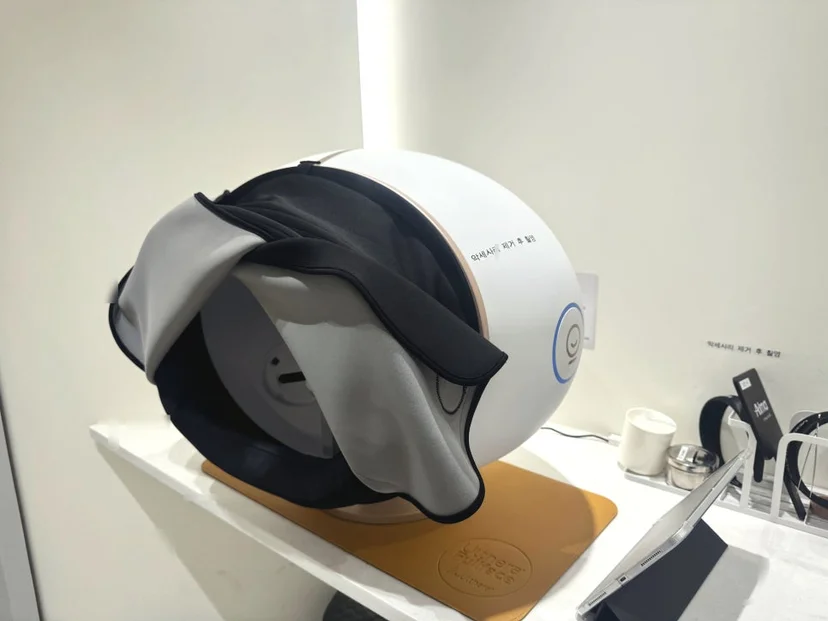
Before deciding on the Titanium Lift, rather than checking only the advantages and moving on, you need a process of first reviewing whether it is actually suitable for your own skin. That is because the appropriate direction differs according to skin thickness, degree of elasticity loss, face shape, amount of fat, and history of previous procedures.
Every procedure can produce temporary reactions such as redness, heat, swelling, and tightness depending on the individual, and rarely, unexpected discomfort may arise. That is why it is important to consult thoroughly with the medical staff before the procedure and to talk specifically about your own skin condition and the change you expect.
At OAN Clinic, we grasp the skin condition objectively with Muse before guiding the direction of the consultation. Besides the Titanium Lift, a different lifting method or combined management may be more suitable depending on the skin condition, so we recommend keeping your options open and receiving a consultation. If cheek volume loss is a concern along with this, read the reason you should check cheek sagging first, and if you are curious about the criteria for filtering out places that recommend a procedure from the start, read the article on how to view a dermatology clinic as well.
Questions frequently asked in the exam room
Who is it worth considering for. Those whose jawline looks blurred or whose cheek sagging has begun, those who look like their elasticity has declined, and those who want to manage the facial line without surgery can consider it. That said, if sagging is severe or the amount of fat is large, it is hard to expect the desired change from the procedure alone, so a prior consultation is needed.
Is the pain severe. During the procedure you may feel heat, a sting, and a pulling sensation, and the degree differs by individual. Those with thin skin or sensitivity to heat, and those having the cheekbones and jawline close to bone treated, may feel the discomfort more strongly, so please let us know in advance during the consultation.
Can I return to daily life right after the procedure. Because it is a non-surgical method, the burden of recovery is known to be relatively small. Temporary redness, heat, swelling, and tightness may appear, but in most cases they ease over time. Since there is individual variation, it is best to check the post-procedure precautions with the medical staff.
What should I check during the consultation. Please convey your skin thickness, degree of elasticity loss, face shape, amount of fat, and history of previous procedures fully. If you also mention your usual sensitivity and worries about pain in advance, it helps as a reference for adjusting the intensity and area. If you are curious about why devices with different methods, such as Oligio Kiss and ONDA, are recommended differently, you can also refer to the reason the two procedures are recommended differently.
If you are curious about the direction that suits your skin, feel free to ask. Get a consultation by chat
Recovery and downtime
The Titanium Lift is a non-surgical lift that manages elasticity with heat energy and no incisions, so after the procedure you may notice redness, warmth, and slight tightness or mild swelling, which tend to settle within a few days. There is individual variation, and those with thin skin or sensitivity to heat may find the reaction lasts a little longer. Because it is non-surgical, a return to daily life from the same day is generally known to be relatively manageable, but since it depends on the treated area and intensity, please check the post-procedure precautions with the medical staff.
How the cost is structured
The cost of a Titanium Lift is hard to state as a single fixed figure. It varies with the skin condition confirmed through Muse measurement, the treatment scope and area (whole face, jawline, cheeks, and so on), the intensity and number of sessions, and whether after-care is included. It also differs depending on whether it is done on its own or as combined management together with another lift. The exact cost is guided after your skin condition is checked during a consultation.
For your beauty visit to Korea
OAN Clinic is located near Sinnonhyeon Station, within walking distance and easy to reach from the Gangnam area, which makes a visit convenient during a trip to Korea. Consultation is available in multiple languages, and before the procedure we check your skin condition with Muse and discuss the direction together. You can arrange a reservation and consultation easily by chat. Book a consultation by chat
Written by: Dr. Oh Seung-min (Representative Director of OAN Clinic, graduate of Seoul National University College of Medicine, Chair of the Academic Committee of the Korean Society for Laser Dermatology and Hair). You can find his detailed background at Medical Team Introduction. First published 2026-06-07 / Last reviewed 2026-07-09
This article is intended to provide general information, and the treatment appropriate for and the results of each individual's condition may differ.


