


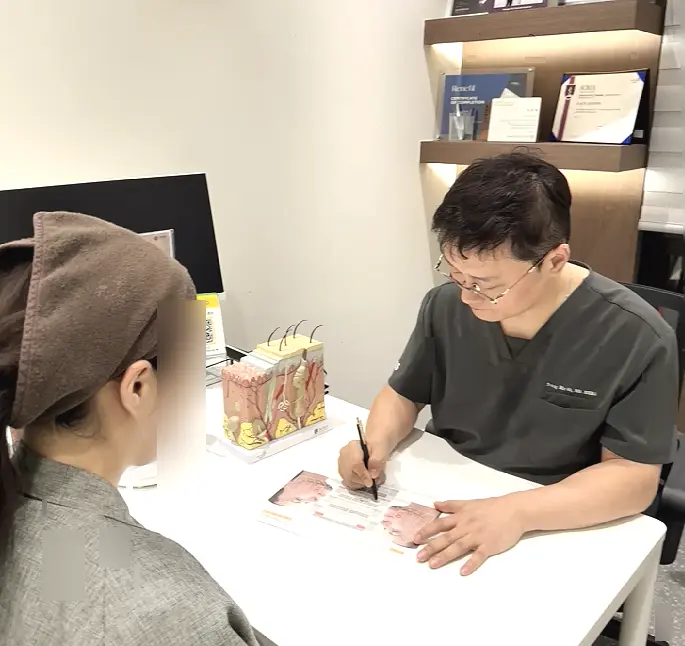
When patients in their 20s ask me about Oligio in the exam room, before deciding how much to raise the intensity, I first look at what kind of stimulation suits their skin right now. Monopolar radiofrequency lifting places relatively little burden on returning to daily life and naturally induces collagen production, so for the prevention and maintenance goals of people in their 20s, a design that does not overdo it tends to determine satisfaction.
Is there a reason to consider a procedure in your 20s, even before any sagging has appeared?
Collagen is known to gradually decrease from the mid-to-late 20s. Even skin that has not visibly sagged can be approached from a preventive and maintenance perspective, caring for it in advance before a decline in elasticity begins in earnest is one option.
Even with the same lifting, goals differ by age group. In the exam room, I explain this difference as follows.
| Category | Focus of the approach | Factors considered together |
|---|---|---|
| 20s | Managing healthy collagen in advance and maintaining skin texture and elasticity | Pores, skin texture, subtle loss of elasticity |
| 30s and 40s | Correction that lifts elasticity that has already declined | Sagging, volume changes |
In skin in the 20s, we look not only at elasticity but also at pores, skin texture, and even very subtle losses of elasticity together. Rather than forcibly lifting with strong stimulation, our basic principle is to naturally induce collagen production at an appropriate intensity suited to the current skin condition. The reason the direction of a procedure changes by age group is explained along similar lines in the exam-room criteria for splitting even the same 30s into three concerns.
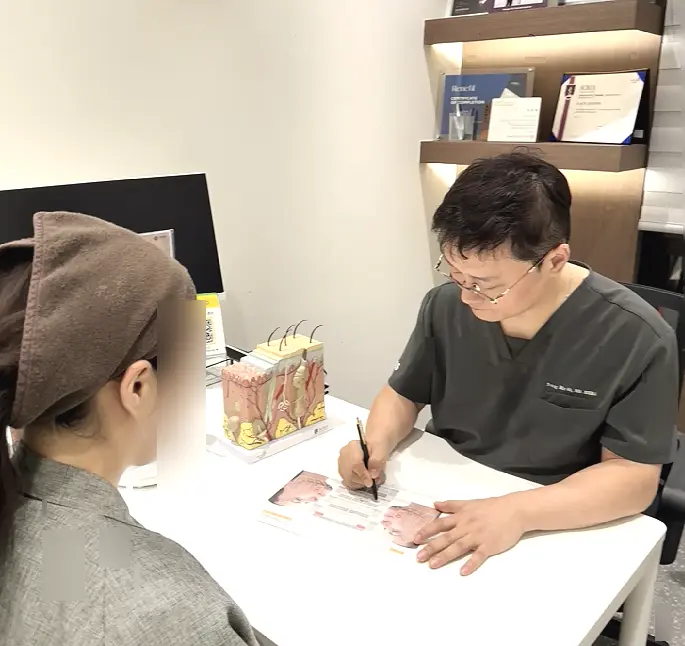
Where Oligio often comes up as a first lifting procedure in the 20s
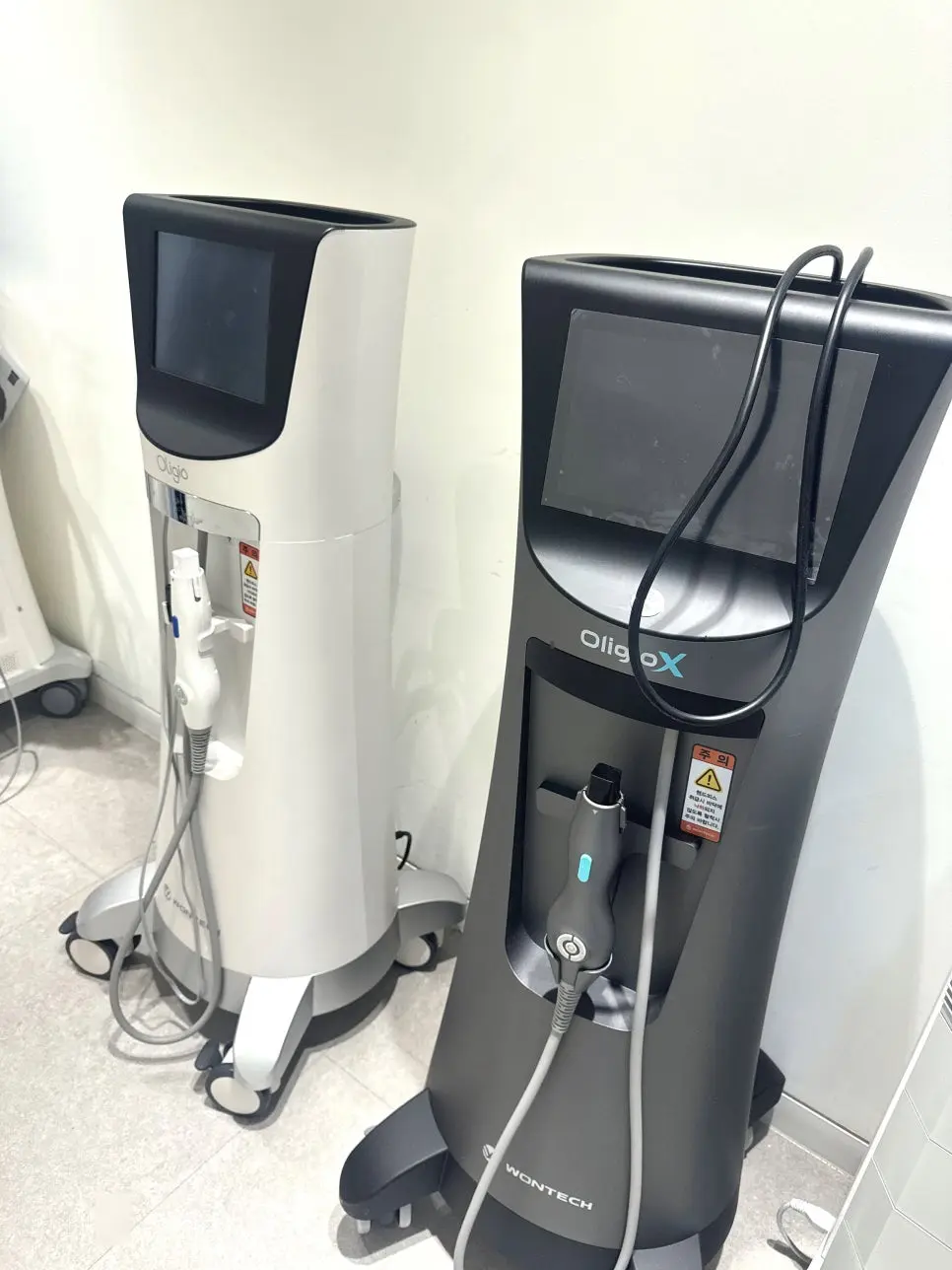
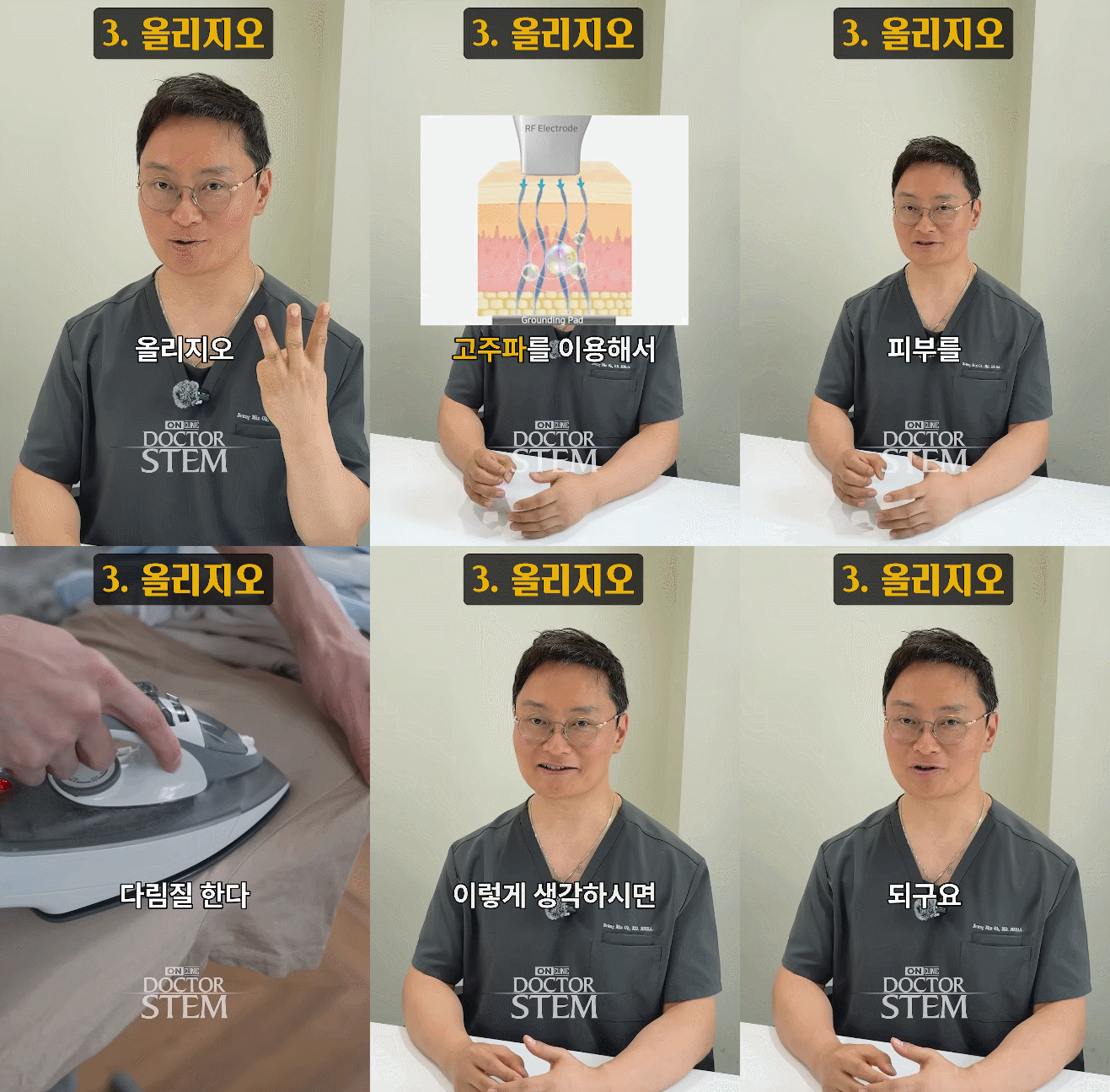
Oligio is a monopolar radiofrequency lifting device, a procedure that delivers thermal energy to the dermis to stimulate collagen production. Because the stimulation is delivered relatively evenly and the burden of returning to daily life is low, it is sometimes suggested as one of the options for people in their 20s considering lifting for the first time.
Summarizing the characteristics I often point out when introducing Oligio to people in their 20s in the exam room:
- A method that induces collagen remodeling through thermal stimulation delivered to the dermis
- The monopolar radiofrequency characteristic in which the stimulation spreads relatively evenly
- The point that it places relatively little burden on returning to daily life, so it can be tried even in a busy routine
- However, the point that reactions and experiences may vary depending on an individual's skin condition
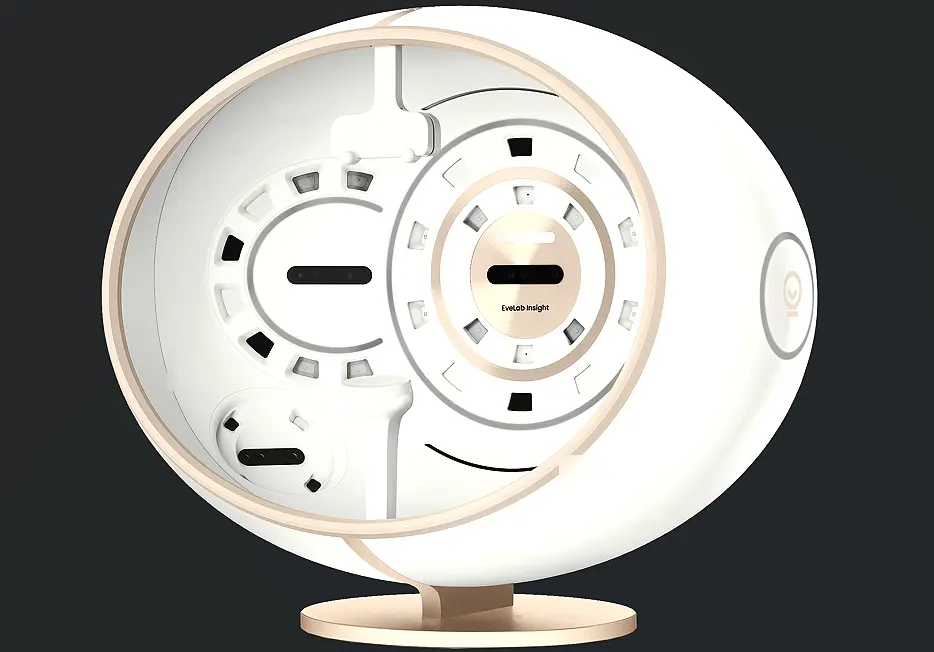
Energy intensity is not simply set high. The process of checking whether it is thermal stimulation appropriate to induce collagen remodeling, taking into account current skin thickness, skin texture, and pore condition, comes first. We recommend an approach that carefully examines the skin condition using tools such as an AI skin analyzer and then decides on an individualized procedure design.
People in their 20s often feel a strong burden from downtime. Oligio has the characteristic of a relatively quick return to daily life, so it is sometimes introduced as a first lifting procedure, but the experience varies depending on an individual's skin condition and reaction. Even among similar radiofrequency-based devices, the approach differs by device, and this nuance is covered in detail in the reason we recommend Oligio Kiss and ONDA lifting differently.
If you are curious about your own skin, you can first get a sense of direction at get a consultation via chat now.
What to check before reviews and cost when choosing a clinic
When looking into Oligio, rather than judging solely by reviews or cost, it is better to check how much the place you plan to visit considers an appropriate intensity and procedure design suited to skin in the 20s. Even when using the same device, satisfaction can differ depending on how the skin condition is analyzed and designed. The order of checking I recommend in the exam room is as follows.
- Check whether there is a preliminary consultation that examines skin thickness, skin texture, and even pore condition in detail
- See whether the energy intensity and direction suited to your skin are set through sufficient consultation
- Receive guidance in advance about the swelling, redness, pain, and temporary heat sensation that may appear after the procedure
Whether the procedure is applied and its intensity must be decided through examination and consultation with medical staff. The perspective of looking at intensity design before device specifications continues in the same context in the reason we do not judge Thermage shot counts by numbers alone.
How should we understand post-procedure reactions and individual differences?
Effects and the course of recovery may differ depending on an individual's skin condition, skin thickness, and procedure design. Immediately after the procedure, a temporary heat sensation, swelling, or redness may appear, and while these tend to ease over time, the degree varies from person to person.
Skin improvement through the stimulation of collagen production often appears gradually as a certain amount of time passes after the procedure. Rather than expecting an immediate change, it is more appropriate to approach it from the perspective of consistent care.
Skin care in the 20s is more helpful when viewed over the long term rather than in short bursts. Because the procedure cycle, number of sessions, and care methods that can be combined vary depending on skin condition, we recommend accurately assessing your own skin and then deciding after fully discussing it with medical staff.
If you also have pore concerns, there are cases where a combination is considered rather than a standalone procedure, and this judgment is explained further in the reason we recommend the Retigen and Oligio X combination for pores.
Frequently Asked Questions
Is it not too early to get Oligio lifting in your 20s?
Collagen is known to gradually decrease from the mid-to-late 20s. Oligio is often approached for prevention and management purposes to maintain healthy skin elasticity rather than to correct elasticity that has already sagged, so it is one of the options that can be considered even in your 20s. However, since suitability for the procedure varies depending on individual skin condition, please decide through a preliminary consultation.
How long does it take to return to daily life after an Oligio procedure?
Oligio is known to place relatively little downtime burden, but temporary swelling, redness, and heat sensation may appear after the procedure, and the course of recovery differs depending on an individual's skin condition. Please check the specific timing of returning to daily life by consulting with medical staff before the procedure.
How is the energy intensity determined during an Oligio procedure?
Rather than simply being set high, it is important to set the energy intensity at an appropriate level that can induce collagen remodeling after comprehensively analyzing an individual's skin condition, including skin thickness, skin texture, and pore condition. It is decided through preliminary analysis using tools such as an AI skin analyzer and consultation with medical staff.
How is an Oligio procedure in the 20s approached differently from the 30s and 40s?
While procedures in the 30s and 40s focus on strongly lifting sagged elasticity, procedures in the 20s are often designed in a direction that naturally induces collagen production at an appropriate intensity suited to the skin condition, taking pores, skin texture, and even subtle loss of elasticity into account together. An individual approach suited to age group and skin condition is needed.
When do the effects of an Oligio procedure begin to appear?
Oligio is a procedure in which skin improvement appears gradually through the stimulation of collagen production, so the effect may appear as a certain amount of time passes after the procedure rather than as an immediate change. The degree and timing of the effect differ depending on an individual's skin condition, and please check the details through consultation with medical staff.
If you are considering whether to start a procedure, begin with your current skin condition get a consultation via chat
Recovery and downtime: what recovery tends to look like after Oligio
Oligio delivers heat to the dermis via monopolar radiofrequency, so it is performed without incisions or injections and is known to place a relatively small downtime burden. Temporary swelling, redness, and a tingling warmth can appear right after the procedure, but these tend to settle within a few days. How recovery unfolds and how long it takes vary with each person's skin condition and the energy intensity chosen. It is best to confirm with the medical staff before the procedure when you can resume everyday routines such as washing your face or wearing makeup.
How the cost is structured
It is difficult to state a single fixed price for Oligio. What shapes the cost includes the scope of pre-procedure analysis such as AI skin measurement, the treated area and its size, the number of shots delivered and the energy settings, and whether soothing aftercare is included. Even within one's 20s, guidance can differ depending on the appropriate-intensity design for prevention and maintenance, so the accurate cost is best explained through consultation after your skin condition has been assessed.
Visiting Korea for aesthetic care
On Clinic is located in Sinnonhyeon, Gangnam, Seoul, within easy walking distance of Gangnam Station, which is convenient for visitors traveling to Korea. Whether Oligio suits you and what intensity is appropriate can be reviewed together while checking your skin condition during an in-person consultation, and multilingual consultation support is available. You can leave reservations and questions in advance via chat consultation.
Written by: Dr. Oh Seung-min (Director of On Clinic, graduate of Seoul National University College of Medicine, Chair of the Academic Committee of the Korean Society for Laser Dermatology and Trichology). Detailed credentials can be found at Meet the Medical Team. First published 2026-06-13 / Last reviewed 2026-07-09
This article is intended to provide general information, and appropriate treatment and results may vary depending on an individual's condition.


