

When doing lifting consultations, I am often asked, "Should I get AllTight, or should I get Ultherapy?" But this question itself is often slightly off the mark. The two treatments target different layers of the skin and deliver energy in different ways, so from the start they are not something to weigh against each other as an "either-or."
AllTight and Ultherapy don't target the same layer to begin with
There is something to point out first. The two treatments are not in a competitive relationship. The depth at which they act and their energy method are fundamentally different, and the reason recommendations differ from one dermatology clinic to another ultimately starts from here.
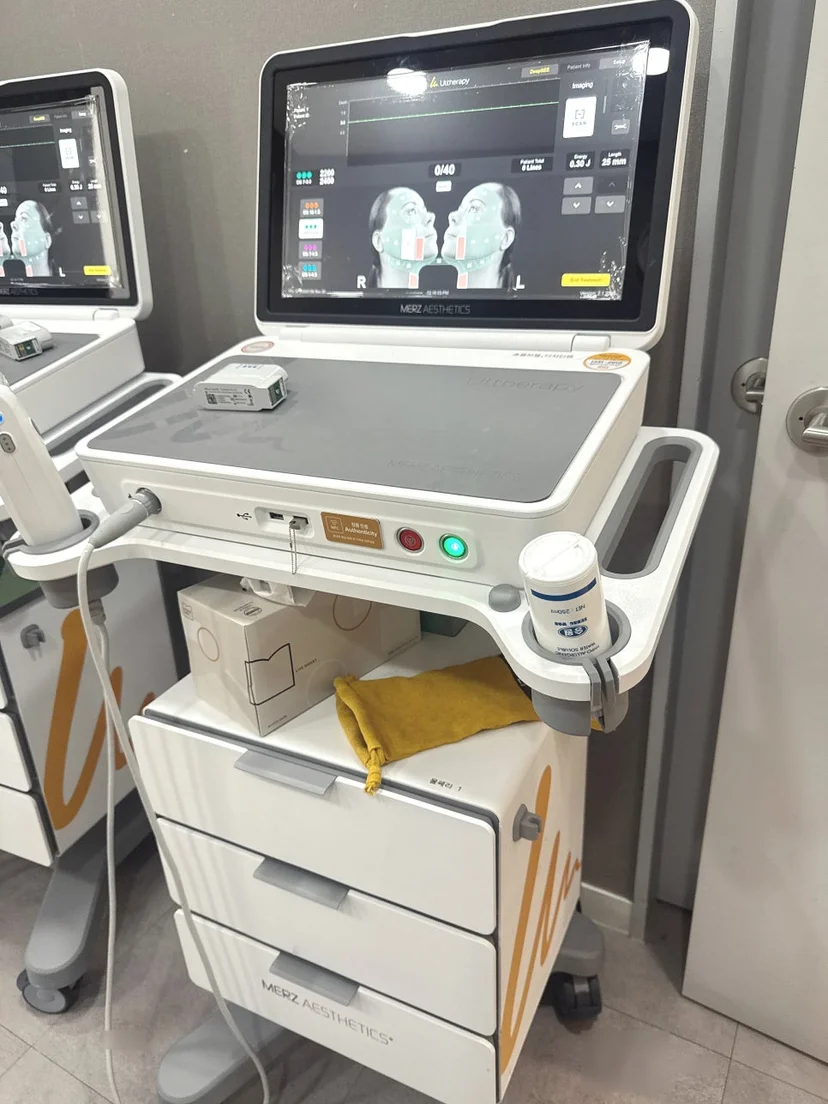
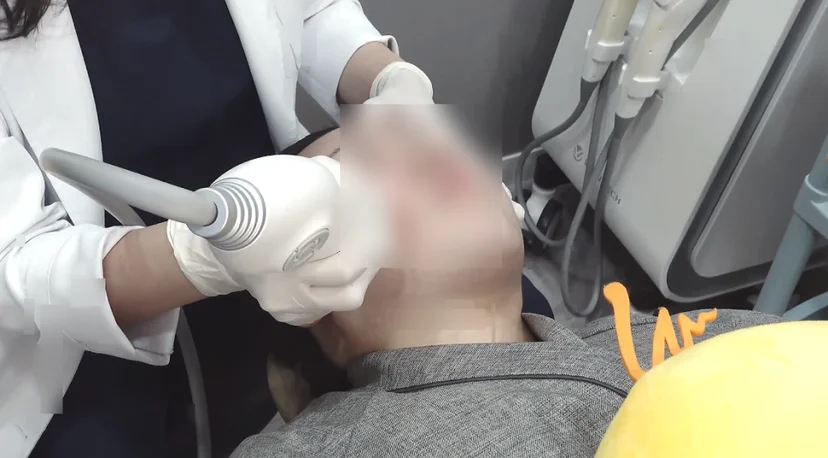
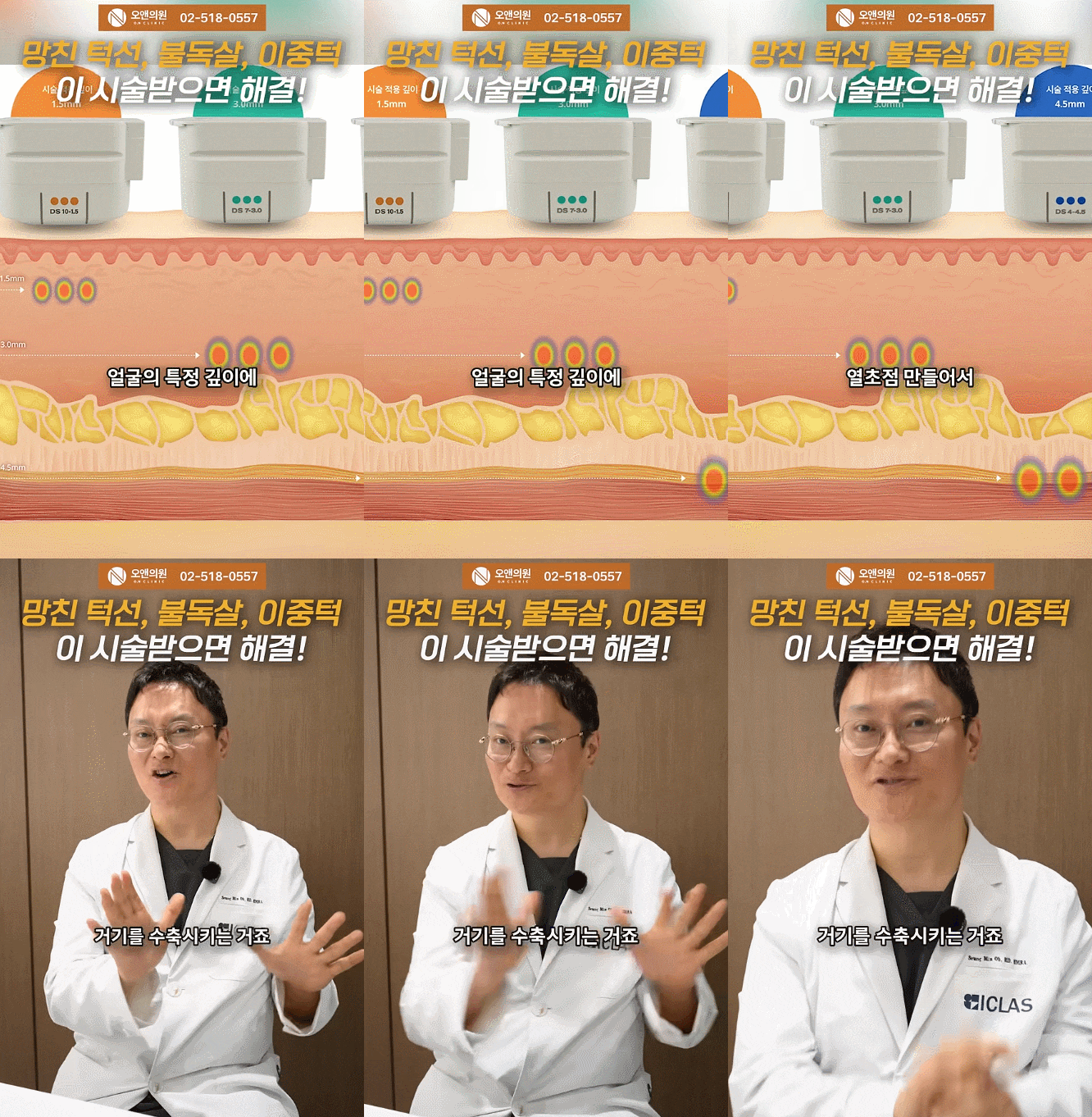
Ultherapy uses high-intensity focused ultrasound — that is, HIFU energy — gathered at a single point to deliver thermal stimulation down to the deep SMAS fascia layer of the skin. Because it approaches a depth similar to the skin layer handled during a facelift in plastic surgery, it is a method with a strength in deeply addressing areas where sagging has progressed to a certain degree.
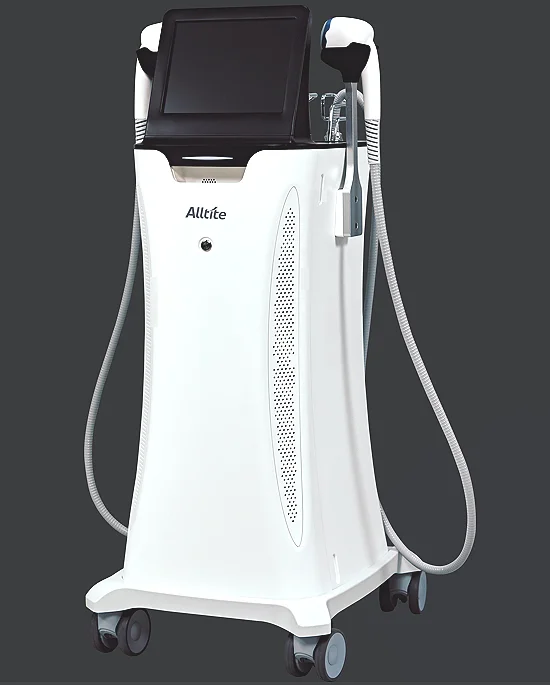
AllTight uses radiofrequency, RF energy. Rather than concentrating energy at a single point, it spreads heat evenly over a wide area, from the skin's surface to the dermis. That is why it can be a fitting choice when you want to manage overall loss of elasticity, skin texture, and fine lines together.
| Category | Ultherapy | AllTight |
|---|---|---|
| Energy | High-intensity focused ultrasound HIFU | Radiofrequency RF |
| Acting layer | Deep SMAS fascia layer | A wide plane from the surface to the dermis |
| Approach | Thermal stimulation concentrated at one point | Uniform stimulation over a wide range |
| Main concern addressed | Advanced sagging | Overall loss of elasticity, skin texture |
It is easy to understand with a home-repair analogy. A tilted wall requires working on the internal structure, while small surface scratches require smoothing the wall surface evenly. It is not that one is a superior job — it is simply that the place being worked on is different.
But why do recommendations differ from one dermatology clinic to another?
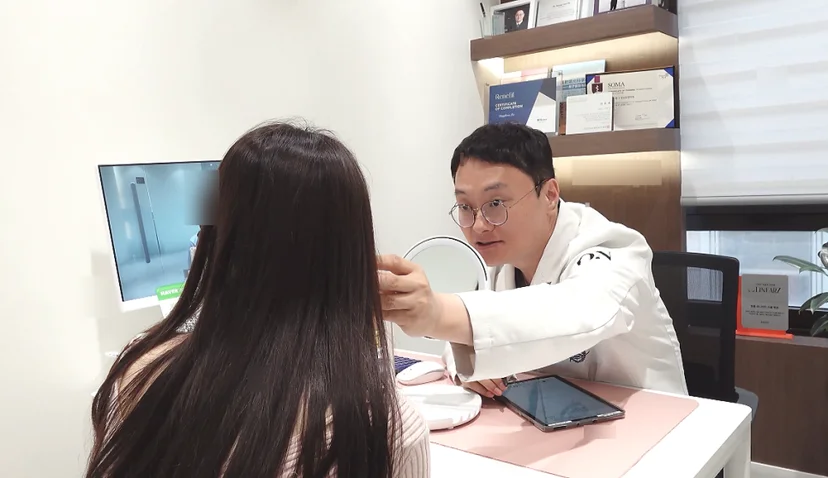
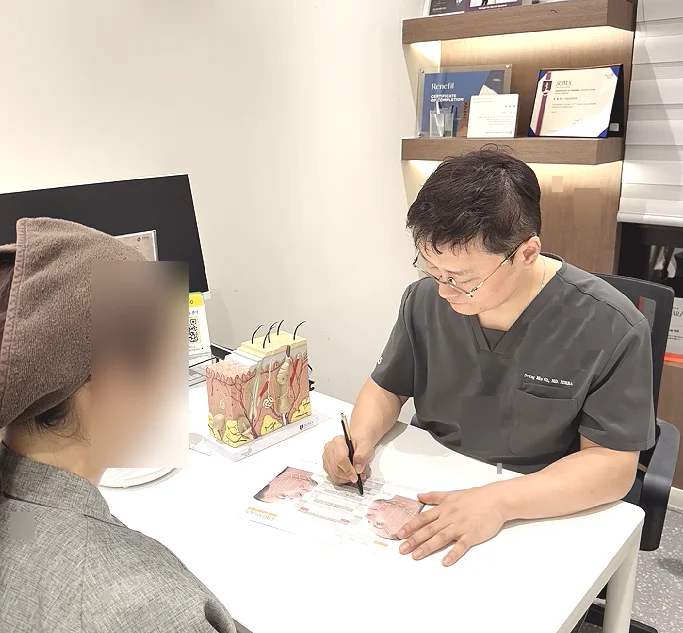
If you carry the same concern and consult several places, you may have had the confusing experience of each clinic recommending a different treatment. Rather than one place being wrong, it is more reasonable to understand this as a difference in where the medical staff place their focus.
If improving sagging is seen as the priority, the weight leans toward ultrasound-based Ultherapy; if managing the elasticity of the whole skin plane comes first, it leans toward radiofrequency-based AllTight. Both treatments aim for lifting, but because their approach path and the layer they stimulate differ, different proposals can emerge for the same concern.
What you really need to examine is not "which dermatology clinic is saying the right thing." It is first distinguishing whether your skin's main concern is sagging, an overall loss of elasticity, or the two overlapping. This distinction is the true starting point for choosing a treatment.
You can go on to check a somewhat deeper comparison of how the two treatments work in the article organizing the lifting difference between AllTight and Ultherapy. For how Ultherapy acts on the deep layer, the article covering the two approach principles of double-chin Ultherapy is helpful.
If it is unclear which side your concern is closer to, you may also get a consultation via chat now and start by sorting out your skin condition.
A combined treatment receiving both — it's a workable idea
To state the conclusion first, you do not necessarily have to choose only one. Because they target different skin layers, combining the two treatments allows an approach where each fills in what the other lacks. Ultherapy handles sagging in the deep layer, and AllTight handles elasticity and texture over the wide plane — each dividing up its role.
The cases worth considering a combined treatment are generally these:
- When both sagging and overall loss of elasticity are on your mind
- When you felt something was lacking after receiving only one treatment
- When you want to tidy up the facial line and skin texture together
That said, "receiving both no matter what" is not the correct answer. It is better to decide after sufficiently consulting the medical staff about whether a combined treatment is actually needed for your skin and, if it is, in what order and interval it is appropriate to proceed. The order of judgment can be organized as follows.
- First distinguish whether the main concern is sagging, loss of elasticity, or both
- Judge together with the medical staff whether one treatment is enough or a combination is needed
- If combining, decide in what order and with roughly what interval, matched to your condition
The effect and response of Ultherapy and AllTight treatments may vary depending on an individual's skin condition. Pain, redness, swelling, and a sensation of heat may appear at the treated area, and rarely a temporary change in sensation has been reported. Whether they apply, the combination, and the order are ultimately parts decided through examination and consultation.

What to check for yourself when choosing the lifting that suits you
Before deciding on a treatment, clearly defining your own concern comes first. Because the suitable approach changes depending on whether the main issue is skin sagging, a change in elasticity and skin texture, or both.
Whether one treatment is enough or a combination is needed is also a part that is hard to answer on your own. This judgment can only be made properly through a consultation with medical staff who have directly examined your skin condition. If you have decided to proceed with a combination, it is good to also check in advance in what order and with what interval to go.
If you are curious about the situations in which AllTight is recommended and actual cases of combining, the article organizing the reasons a Gangnam dermatology clinic recommends AllTight will help, and if you are curious about how long the treatment effect lasts, the article covering the duration of Ultherapy's effect and the treatment cycle will help you set your direction.
In the end, the most realistic way to escape the confusion of "I have to choose only one of the two" is to meet medical staff who explain concretely the combination and order that suit your skin condition and concern.
Questions that often come up before a consultation
Which is more effective, AllTight or Ultherapy? It is more accurate to see their roles as different rather than ranking their effect. Ultherapy uses ultrasound to stimulate the deep SMAS fascia layer and approach sagging, while AllTight uses radiofrequency to handle the elasticity and skin texture of a wide area. Which one suits you better varies depending on your individual skin condition and main concern, so a consultation with the medical staff is necessary.
Can I receive both treatments together on the same day? Because the layers they stimulate differ, there are cases where combining is possible. However, whether to proceed on the same day or to proceed sequentially with an interval is a part the medical staff will judge after looking at your skin condition and treatment range. Receiving both no matter what is not necessarily better, so I recommend a thorough consultation.
What kind of reactions can occur after the treatment? Pain, redness, swelling, and a sensation of heat may appear at the treated area, and rarely a temporary change in sensation has been reported. Since the degree and duration of symptoms have individual differences, it is important to consult thoroughly with the medical staff before the treatment.
Who is a combined treatment especially suited to? It is for cases where both sagging and an overall loss of elasticity are on your mind, cases where you felt one treatment alone was lacking, and cases where you want to tidy up the facial line and skin texture together. The actual suitability and order of proceeding are decided through a consultation.
If you have questions left, feel free to ask them comfortably through getting a consultation via chat now.
Recovery and downtime: how energy lifting settles
Because Ultherapy and AllTight work with ultrasound and radiofrequency energy rather than incisions or injections, the return to daily life tends to be relatively quick. Right after the treatment, redness, swelling, a tingling feeling, or a sensation of heat may be felt at the area, but these generally tend to settle within a few days, with individual differences in degree and duration. Rarely, a temporary change in sensation has been reported. The pace of recovery can vary with the treatment range, intensity, and whether the two are combined, so it is good to check the expected course with the medical staff before the treatment.
How the cost is structured
The cost of Ultherapy and AllTight is less a single fixed amount than something set by several overlapping factors. It varies with the treated area (the whole face, double chin, neck, and so on) and range, the number of Ultherapy lines (shots) or the area covered by AllTight, whether the two treatments are combined, and whether aftercare is included. So even for the same "lifting," what is explained can differ depending on your condition. The exact cost is provided through a consultation after checking your skin condition and the range needed.
Visiting Korea for aesthetic care
On Clinic sits in the Gangnam area within walking distance of Sinnonhyeon Station, so visiting is not difficult even during a trip to Korea. Whether a combination is needed and in what order to proceed are parts that can only be sorted out after examining your skin directly, so we suggest an in-person consultation first. For multilingual consultation, interpretation support, or reservations, you can ask comfortably via getting a consultation via chat now.
Written by Dr. Oh Seung-min (Chief Director of On Clinic, graduate of Seoul National University College of Medicine, Chair of the Academic Committee of the Korean Society for Laser Dermatology and Hair). Detailed credentials can be checked at Medical Team Introduction. First published 2026-07-08 / Last reviewed 2026-07-09
This article is intended to provide general information, and the treatment and results appropriate for an individual may vary depending on their condition.


